
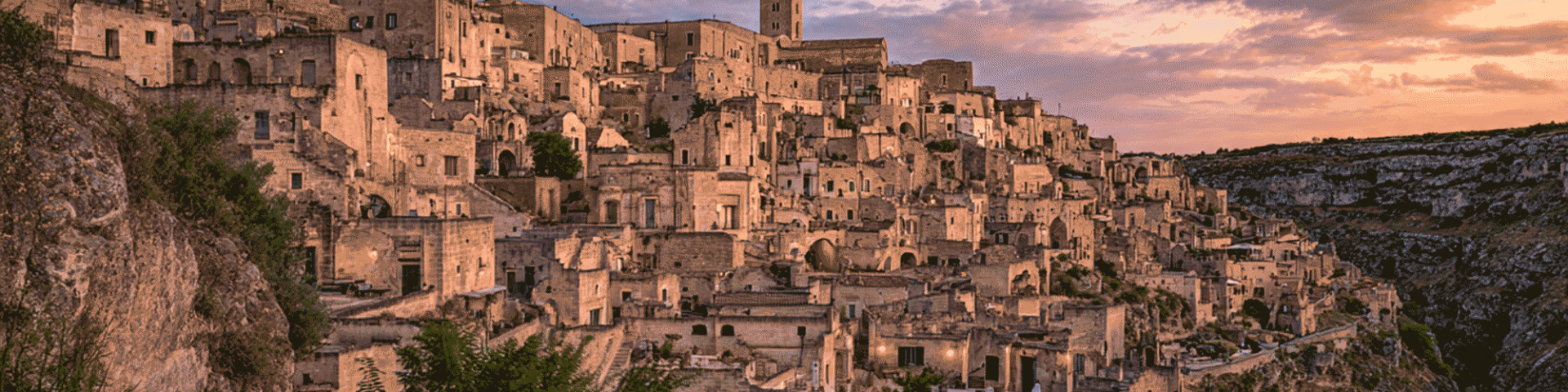
Data doesn’t lie. As 2026 unfolds, this ancient city carved into the limestone cliffs of Basilicata isn’t just trending—it’s shattering tourism records. Hotel occupancy is near capacity. The historic center overflows with visitors from across Italy and the globe. And there’s one simple reason: Matera has been named the Mediterranean Capital of Culture and Dialogue 2026 .
But here’s what the tourism data won’t tell you: Matera isn’t just a destination. It’s a journey 9,000 years in the making. It’s the only place on Earth where you can sleep in the same cave dwellings your ancestors inhabited at the dawn of civilization .
The question isn’t whether you should visit. It’s: Can you afford to miss the year Matera finally takes its rightful place on the world stage?
Why 2026 Is the Year
The numbers paint an undeniable picture. Matera’s accommodation sector is reporting excellent occupancy rates, with the historic Sassi districts buzzing day and night. Italian and international tourists alike are flocking to this southern Italian gem, and the nearby Bari airport is channeling a steady stream of foreign visitors directly to the city’s ancient gates .
“We are seeing families, but also many young people coming to the city of the Sassi,” reports Michele Martulli of Confcommercio. “We are very close to having all available places booked” .
Local operators confirm the frenzy. “The city is in full effervescence: there are so many reservations that we can almost say they are sold out,” adds Guido Galante, president of the B&B Matera association .
This isn’t just seasonal enthusiasm. Matera’s designation as Mediterranean Capital of Culture and Dialogue 2026 has transformed it into a destination “on par with European capitals,” according to Margherita Sarli, director of the Basilicata Tourism Board . A full calendar of cultural events—from traditional nativity scenes to New Year’s Eve concerts featuring Italian stars—keeps the city pulsating with energy .
Matera by the Numbers: A Statistical Portrait
The Sassi: A Living Masterpiece
The heart of Matera beats in its Sassi districts—Sasso Caveoso and Sasso Barisano. These aren’t archaeological ruins cordoned off for tourists. They’re living neighborhoods where ancient stone dwellings have been transformed into boutique hotels, atmospheric restaurants, and private homes .
The term “Sassi” derives from the Latin saxum, meaning a hill, rock, or great stone . And indeed, these districts represent one of the most extraordinary urban landscapes on Earth. Fodor’s describes them as “one of the most unique landscapes in Europe” .
Walking through the Sassi means navigating a labyrinth of narrow alleyways, stone staircases, and hidden courtyards. Streets often run atop other houses—a vertical city where one person’s roof is another’s front door. The architecture is seamless, carved directly into the calcarenitic rock locally called “tufo” (though it’s neither volcanic tuff nor tufa limestone) .
The two districts offer distinct personalities:
Sasso Caveoso takes its name from the Latin caveatus—”arranged in a theater shape.” Here, cave dwellings open directly onto the streetscape, creating an almost theatrical presentation of prehistoric habitation.
Sasso Barisano, meanwhile, features more built-up facades while still maintaining the cave-dwelling core. The name may derive from the Greek words for “chasm” and “above”—fitting for a neighborhood perched dramatically over the Gravina ravine .
Best Time to Visit: Timing Your Matera Magic
Matera rewards strategic timing. Here’s when to strike:
Spring (April-June): The sweet spot. Mild temperatures averaging 12–23°C, blooming landscapes, and the full flowering of Matera’s cultural calendar. Perfect for endless wandering through the Sassi’s staircases and alleyways .
Autumn (September-October): A close second. Pleasant weather, golden light that sets the tufo stone aglow, and harvest season flavors in local restaurants. Crowds thin slightly after summer’s peak .
Winter (November-February): The magic of Christmas transforms Matera. Lights, nativity scenes, and a complete calendar of holiday events make the Sassi “a unique setting that combines an enchanting and welcoming atmosphere” . The city reaches “maximum tourist influx” on December 31 . Temperatures average 7–9°C—cold but magical .
Summer (June-August): Hot and dry, with temperatures reaching 26°C+. Daytime exploration can be intense, but evenings come alive with al fresco dining and cool canyon breezes. Peak tourist season means booking well in advance .
Pro tip: Two full days (three nights) is the recommended minimum. Waking up and ending your day in this ancient setting creates an experience fundamentally different from a rushed day trip .
Top Attractions: The Essential Matera Bucket List
1. The Sassi Districts
The main event. Spend at least a full day getting lost in both Sasso Caveoso and Sasso Barisano. Every turn reveals a new perspective—a hidden church, a sweeping canyon view, a cave dwelling converted into a chic cafe. This isn’t sightseeing; it’s immersion .
2. Belvedere Luigi Guerricchio
Right at the entrance to the Sassi near Piazza Vittorio Veneto, this viewpoint delivers the quintessential Matera panorama: a sweeping vista of stone houses, colorful shutters, and the cathedral’s bell tower rising above the ancient labyrinth .
3. Belvedere Murgia Timone
For the iconic postcard view looking back at the Sassi from across the ravine, this is your spot. Hike down into the Gravina, cross the Tibetan suspension bridge, and climb the other side for a perspective that reveals the full majesty of Matera’s cliff-hugging architecture .
4. Matera Cathedral (Cattedrale di Maria Santissima della Bruna)
Dominating the skyline from the highest point of the Civita, this 13th-century Romanesque cathedral separates the two Sassi districts. Its tall bell tower is Matera’s most recognizable landmark. The adjacent Piazza Duomo offers sweeping views and a palpable sense of history .
5. The Rupestrian Churches
Matera’s rock churches represent one of the most extraordinary concentrations of cave churches in the world .
Santa Maria de Idris sits dramatically atop a rock spur in Sasso Caveoso—a short climb rewards you with its iconic facade .
San Pietro Barisano is the largest rock church in Matera, dating to the 12th century. Explore its fascinating frescoes, underground burial chambers (catacombs), and the haunting area once used for draining corpses .
San Pietro Caveoso anchors the square of the same name, its facade overlooking the ravine in spectacular fashion.
6. Casa Grotta
For a visceral understanding of how people actually lived in the Sassi for millennia, visit a restored cave dwelling. The Casa Grotta del Casalnuovo offers a sculpted environment showing pre-modern life—complete with period furnishings and tools .
7. Palombaro Lungo
Beneath Piazza Vittorio Veneto lies an engineering marvel: a massive ancient cistern that once secured Matera’s water supply. This underground reservoir, carved from the rock, demonstrates the sophisticated water management that sustained the city for centuries .
Matera on Screen: Hollywood’s Favorite Ancient City
The Sassi’s visual power hasn’t escaped Hollywood’s notice. Matera’s uncanny resemblance to ancient Jerusalem has made it a cinematic favorite .
Pier Paolo Pasolini opened the floodgates with The Gospel According to St. Matthew (1964). Mel Gibson followed with The Passion of the Christ (2004), using the Sassi as a haunting stand-in for biblical Jerusalem. Catherine Hardwicke shot The Nativity Story (2006) here, and even Ben-Hur (2016) returned to Matera’s timeless streets .
But the Hollywood love affair extends beyond biblical epics. Patty Jenkins chose Matera to portray the Amazons’ city Themyscira in Wonder Woman (2017) . And James Bond himself roared through the Sassi in No Time to Die (2021), sending an Aston Martin racing through these ancient lanes .
Walking Matera’s streets means walking through cinematic history—a backlot 9,000 years in the making.
Where to Stay: Sleeping in History
Matera’s accommodation is an attraction in itself. Nowhere else can you sleep in a 9,000-year-old cave while enjoying modern luxury.
Sextantio Le Grotte della Civita: Often cited as Matera’s most atmospheric cave hotel experience. Eighteen unique cave rooms and suites are scattered around an ancient rock church, now the common area. It masterfully blends ancient authenticity with understated luxury—though views primarily overlook the ravine rather than the Sassi cityscape .
Sant’Angelo Luxury Resort: Boasts some of the best hotel views in Matera, looking out over Piazza San Pietro Caveoso and the Murgia Park across the ravine. Many rooms feature white tuff stone interiors and cave-like features .
Palazzo Gattini Luxury Hotel: A luxurious option housed in a former noble palace near the Cathedral. Spacious suites offer balconies, vaulted ceilings, and prime location—more palace than cave, but undeniably elegant .
Il Belvedere: A boutique hotel set within caves, offering stunning views over Sasso Caveoso. With only nine rooms, it offers intimate access to the ancient setting .
Il Palazzotto Residence & Winery: Ten unique cave residences in Sasso Barisano. Each room features original stone barrel vaults and textured walls highlighting the structure’s character .
Pro tip: Book well in advance for 2026. The Mediterranean Capital designation has triggered a booking surge, and the most atmospheric properties fill quickly.
Where to Eat & Drink: Flavors of the Stone City
Basilicata cuisine stands out for its simplicity and depth of flavor .
Must-try dishes:
- Pasta with bread crumbs (pasta con la mollica): A peasant dish transformed into culinary poetry
- Peperoni cruschi: Fried, sweet, crispy peppers—a local obsession
- Orecchiette: The characteristic ear-shaped pasta, often served with turnip greens
- Lucanian sausage: Ancient-seasoned pork with fennel and chili
Top restaurants:
Osteria Al Casale: A perennial favorite along a main Sassi street overlooking the ravine. Classic Italian starters, excellent pasta, and their bruschetta draws raves. Request an outside table .
Regiacirte: Upscale dining with perhaps the best dinner views directly overlooking the Sassi. Tasting menus and à la carte—pricier, but worth it for the terrace view .
Baccanti & Trattoria del Caveoso: Both offer authentic dining experiences in atmospheric settings .
La Bruschetta: Reliable and affordable, located above the Sassi. Known for its namesake dish and fresh pasta .
Il Rusticone: Authentic pizza in the upper town—small, so arrive early .
Conzato Norcineria: Casual spot within the Sassi for lunch: fresh salads, bruschetta platters, sandwiches .
For drinks: Zipa Cafe is an atmospheric cave bar with scattered cushions on a rocky terrace—perfect for sunset cocktails overlooking the Sassi .
For gelato: I Vizi Degli Angeli in the upper town offers some of the best .
The 2026 Cultural Calendar
Matera’s Mediterranean Capital of Culture designation means a year-round festival of events .
Festa della Bruna (July 2): Matera’s most important annual celebration, honoring the city’s patron saint with a spectacular procession and the ceremonial destruction of a decorated papier-mâché cart.
Christmas Season: Matera transforms into a nativity scene—literally. Living nativity scenes (presepi viventi) draw thousands, with costumed villagers recreating biblical scenes among the ancient caves. The December 31 New Year’s Eve celebration in the main square features major Italian performers .
Ongoing Cultural Programming: Throughout 2026, expect exhibitions, performances, and dialogues spanning traditional to contemporary culture—all leveraging Matera’s unique setting as a “laboratory of cultural and tourism policies” .
Practical Tips for Your Matera Adventure
Getting There
Fly into Bari Palese International Airport (BRI) —the closest major airport, about an hour’s drive from Matera. From Bari, trains and buses run regularly (journey time approximately 1 hour). Car rental is also available at the airport .
Getting Around
The Sassi is a pedestrian zone (ZTL) . You cannot drive into its heart. Park in paid garages in the upper, modern city and walk down. Exploring involves extensive walking on uneven stone paths with many stairs—this is part of the experience. Wear comfortable shoes .
If mobility is a concern, tuk-tuk tours offer a way to see main areas with less physical exertion .
Where to Stay (Location Strategy)
The choice is between staying within the Sassi (atmospheric, immersive, involves stairs and walking) or staying in the modern upper city (easier access, more conventional hotels). For the full Matera experience, book a cave hotel in the Sassi .
What to Pack
Spring/Autumn: Layers. Comfortable walking shoes are non-negotiable. A light jacket for evenings .
Summer: Lightweight, breathable clothing. Sun hat, sunscreen, sunglasses. Evenings cool slightly .
Winter: Warm coat, hat, scarf, gloves. The stone retains cold, and the Sassi can feel chilly .
Year-round: The best accessory is curiosity. Leave the map behind for an hour and simply wander.
Sustainable Travel
Matera’s UNESCO designation comes with responsibility. Contribute by:
- Respecting marked paths and private property
- Using water sparingly (the region faces periodic drought)
- Supporting local artisans and businesses
- Booking official guides who interpret the site responsibly
The Verdict: Why Matera in 2026
Here’s the truth travel marketers rarely state so plainly: some destinations are merely visited. Others change you.
Matera is the latter.
It’s the only place on Earth where you can trace human habitation across 9,000 unbroken years—from Paleolithic hunter-gatherers to Neolithic farmers, from medieval monks to Renaissance nobles, from 1950s peasants to 21st-century travelers sleeping in caves .
It’s where Hollywood imagines Jerusalem and the Amazons’ Themyscira—because no set designer could invent what nature and humanity carved together .
It’s a city that was once called “a national shame” for its primitive conditions, only to transform into a UNESCO masterpiece and now a Mediterranean Capital of Culture .
And in 2026, with the world’s eyes turning toward this ancient stone city, Matera isn’t just ready for its moment. It’s been waiting 9,000 years.
The caves are calling. The culture is pulsing. The record books are being rewritten.
Book your journey before the world catches up.
#Matera2026 #TravelData #Italy #UNESCO #CulturalCapital


